
Key Takeaways:
- SEO helps manufacturers attract high-quality leads. Industrial buyers often research suppliers, products, certifications, and capabilities online before contacting a sales team.
- Manufacturing SEO requires a specialized approach. Keyword research, technical SEO, local visibility, content marketing, and backlinks must be tailored to complex products, long sales cycles, and B2B buyer behavior.
- Long-term growth depends on consistency. Manufacturers need ongoing content refinement, performance tracking, and authority building to sustain rankings and generate qualified inquiries over time.
In today’s digital-first industrial landscape, manufacturers face increasing pressure to stand out, reach the right buyers, and generate sustainable business growth.
Search engine optimization, or SEO, helps manufacturing companies improve their visibility on Google and other search platforms. But search behavior is changing. Industrial buyers are no longer relying only on traditional search results. They are also using AI-powered platforms such as ChatGPT, Perplexity, Gemini, and AI Overviews to research suppliers, compare solutions, and understand technical topics.
That means manufacturers need to optimize not only for rankings, but also for AI Search visibility.
A strong manufacturing SEO and AI Search strategy helps your company appear when engineers, procurement teams, distributors, OEM buyers, and business decision-makers are actively searching for products, suppliers, certifications, and technical solutions.
In the industrial sector, digital buying behavior is accelerating. Digital Commerce 360 reported that 65% of industrial B2B buyers had made at least one online purchase in 2025. This reinforces the need for manufacturers to have a strong digital presence across SEO, AI Search, product pages, technical content, and supplier discovery channels.
- What Is Manufacturing SEO?
- SEO Approach
- 1. Keyword Research
- 2. On-Page Optimization
- 3. Technical SEO
- 4. Local SEO
- 5. Content Marketing
- 6. Backlink Strategy
- 7. Analytics and Reporting
- Ready to Grow?
What Is Manufacturing SEO?
Manufacturing SEO is the process of optimizing a manufacturing company’s website and digital presence so it ranks higher in search engine results for relevant products, services, capabilities, and industry-specific searches.
Today, manufacturing SEO also includes AI Search optimization. This means making your website, content, brand, and expertise easier for AI-powered search platforms to understand, summarize, and cite.
Unlike general SEO, manufacturing SEO must account for technical products, niche buyer intent, complex specifications, long sales cycles, and highly specialized search behavior.
For example, a potential buyer may search Google or ask an AI platform questions such as:
- Custom CNC machining services
- ISO 9001 certified injection molding supplier
- Best material for aerospace components
- CNC machining vs 3D printing for prototypes
- Reliable plastic extrusion company near me
- What should I look for in a precision parts manufacturer?
A strong manufacturing SEO and AI Search strategy helps your company appear when these buyers are actively researching solutions. Whether you serve local businesses, regional distributors, or global OEMs, SEO helps connect your capabilities with the decision-makers who need them.
Why AI Search Matters for Manufacturers
AI Search is changing how industrial buyers discover and evaluate suppliers.
Instead of clicking through multiple search results, buyers may now ask AI-powered tools for direct answers, supplier recommendations, process comparisons, material explanations, or buying criteria. These platforms often summarize information from multiple sources and highlight brands, websites, or publications they view as authoritative.
For manufacturers, this creates both a risk and an opportunity.
If your website content is thin, unclear, poorly structured, or lacking authority, AI platforms may overlook your company. But if your content is detailed, trustworthy, well-structured, and supported by external mentions, your brand has a better chance of being included in AI-generated answers.
To improve AI Search visibility, manufacturers should focus on:
- Clear product and service descriptions
- Direct answers to common buyer questions
- FAQ sections
- Comparison content
- Technical explainers
- Case studies
- Authoritative backlinks
- Industry mentions
- Structured data and schema markup
- Consistent brand and company information across the web
AI Search optimization does not replace SEO. It builds on it. The manufacturers that win in the future will be the ones that are visible across both traditional search results and AI-generated answers.
Why does this matter?
Increased Search Visibility
Industrial buyers now begin much of their supplier research online. Engineers, procurement managers, plant managers, and business owners often search for products, materials, certifications, and capabilities before ever speaking with a sales representative.
If your website does not rank for the right keywords, potential buyers may find your competitors instead.
Manufacturing SEO helps your company appear for searches related to your services, product categories, applications, industries served, and technical expertise. This makes your business more visible during the research and evaluation stages of the buyer journey.
Stronger Industry Authority
Ranking well in search results does more than drive traffic. It also builds credibility.
In the manufacturing industry, buyers want to work with suppliers they can trust. A well-optimized website with detailed service pages, technical content, case studies, certifications, and clear product information can position your company as a knowledgeable and reliable partner.
When your website consistently appears for industry-specific searches, it strengthens your authority and helps build confidence before a prospect even contacts you.
Better Long-Term ROI
Paid advertising can generate traffic quickly, but once the budget stops, the traffic often stops too. SEO works differently.
A strong SEO strategy can continue generating visibility, traffic, and leads over time. For manufacturers with long sales cycles, this is especially valuable. Buyers may visit your website multiple times before submitting an RFQ, requesting a consultation, or contacting sales.
By targeting high-intent keywords and improving website performance, SEO can help manufacturers generate better-qualified leads at a lower long-term cost.
SEO Approach
To succeed in a competitive industrial market, manufacturers need more than a basic website. They need a strategic SEO approach built around how technical buyers search, evaluate, compare, and choose suppliers.
A strong manufacturing SEO strategy should include the following areas.
1. Keyword Research
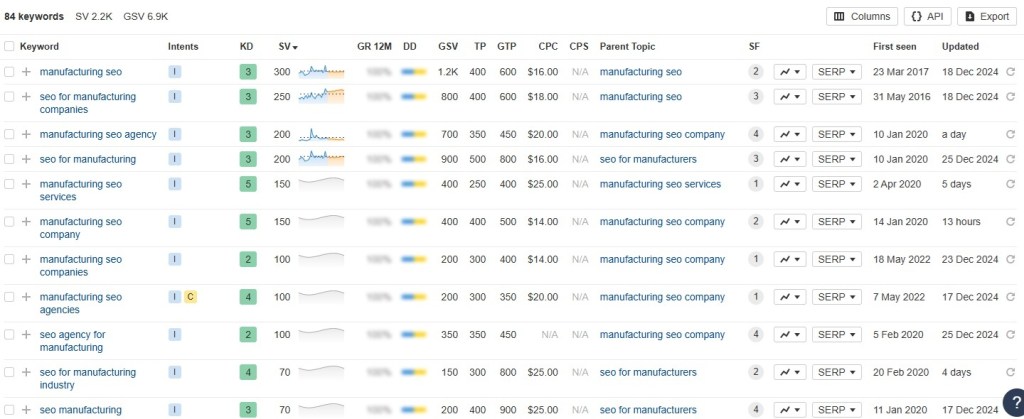
A keyword research tool displaying data for manufacturing-related SEO keywords.
Effective manufacturing SEO starts with precise keyword research.
Industrial buyers often use technical, application-specific, and capability-based search terms. Instead of broad keywords, they may search for exact materials, processes, certifications, industries, or product specifications.
Focus on High-Intent Keywords
High-intent keywords show that a searcher is closer to taking action. These may include phrases such as:
- Custom CNC machining quote
- ISO 9001 certified injection molding supplier
- Stainless steel fastener manufacturer
- Laser cutting services for industrial parts
- Aerospace sheet metal fabrication
These searches are valuable because they often come from users who are evaluating suppliers or preparing to request a quote.
Match Keywords to Your Offerings
Your keyword strategy should directly reflect your actual services, products, materials, industries, and capabilities.
For example, if your company offers plastic extrusion, your SEO strategy should not only target broad manufacturing terms. It should also include specific terms related to plastic extrusion services, materials, applications, tolerances, and industries served.
This alignment helps attract visitors who are more likely to become qualified leads.
Cover the Full Buyer Journey
Manufacturing buyers do not always search with the same intent. Some are learning, some are comparing, and others are ready to contact a supplier.
Your keyword strategy should cover each stage:
- Awareness: What is CNC machining?
- Comparison: CNC machining vs 3D printing for prototypes
- Evaluation: Best material for aerospace components
- Conversion: Custom CNC machining supplier near me
- RFQ intent: Get a quote for precision machined parts
By mapping keywords across the full buyer journey, your website can support prospects from early research to final supplier selection.
2. On-Page Optimization

A webpage showcasing services for plastic injection molding.
In the manufacturing space, every page should be treated as a sales and search asset. This includes product details, capability overviews, and case studies.
This includes service pages, product pages, industry pages, case studies, blog articles, and technical resource pages. On-page SEO helps search engines understand your content while making it easier for buyers to find the information they need.
Optimize Key Page Elements
Important on-page elements include:
- Title tags
- Meta descriptions
- H1 and H2 headings
- URL structure
- Body copy
- Image file names
- Image alt text
- Internal links
- Calls to action
For example, instead of using a vague page title like “Capabilities,” use a more descriptive title such as “CNC Milling Services for Aerospace Components.”
This improves keyword relevance and makes the page clearer for both search engines and buyers.
Make Technical Content Easy to Scan
Manufacturing buyers often look for specific information quickly. Your pages should be structured clearly with:
- Short paragraphs
- Descriptive headings
- Bullet points
- Technical specifications
- Certifications
- Materials
- Applications
- Industries served
- Lead times
- RFQ buttons or contact forms
Clear structure improves readability, supports SEO, and helps visitors move toward conversion.
Align Content With Search Intent
Not every visitor is ready to buy immediately. Some users may want educational information, while others are comparing suppliers or looking for pricing.
Your content should match the intent behind the keyword.
For example:
- A blog article can answer “how does powder coating work?”
- A service page can target “powder coating services”
- A case study can support users comparing supplier experience
- An RFQ page can capture ready-to-convert buyers
When your content matches search intent, it is more likely to rank, engage visitors, and generate leads.
3. Technical SEO
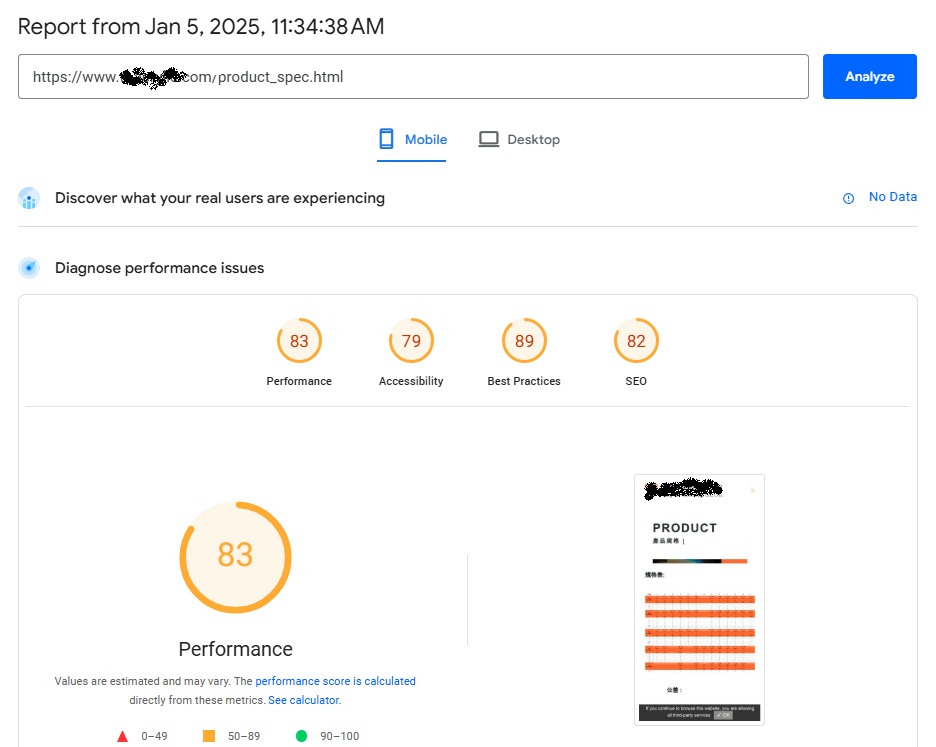
A Lighthouse performance report for a mobile-optimized manufacturing product page.
Manufacturing websites often include complex product catalogs, technical documents, PDFs, CAD files, specification sheets, and detailed service pages.
Without strong technical SEO, important content may be difficult for search engines to crawl, index, and rank. It may also create a poor user experience for potential buyers.
Improve Site Architecture
A clear website structure helps both users and search engines understand your business.
Manufacturing websites should organize pages by:
- Products
- Services
- Capabilities
- Materials
- Industries served
- Applications
- Certifications
- Locations
- Resources
Important pages should be easy to reach within a few clicks from the homepage. This helps buyers find relevant information quickly and helps search engines discover your most important pages.
Optimize Page Speed and Mobile Performance
Slow websites can hurt both rankings and conversions. This is especially important for manufacturing websites with large images, videos, technical files, or product catalogs.
Key improvements may include:
- Compressing images
- Reducing unnecessary scripts
- Improving Core Web Vitals
- Using browser caching
- Optimizing mobile layouts
- Reducing large file sizes
- Cleaning up unused code
A faster site creates a better experience for engineers, procurement teams, and decision-makers who may be researching suppliers across different devices.
Make Technical Resources Search-Friendly
Many manufacturing websites rely heavily on PDFs, brochures, and downloadable spec sheets. These assets can be useful, but they should not replace optimized HTML pages.
Whenever possible, important product and service information should appear directly on website pages, not only inside downloadable files.
This helps search engines understand the content and gives buyers a better experience before they contact your team. It also delivers a seamless experience that drives more qualified traffic and leads to better conversion rates.
Structured Data for Search and AI Visibility
Schema markup helps search engines better understand your website content. While schema alone does not guarantee rankings or AI citations, it can improve how clearly your business information, services, FAQs, reviews, and organization details are interpreted.
Manufacturers should consider schema types such as:
- Organization schema
- LocalBusiness schema
- Product schema
- Service schema
- FAQ schema
- Article schema
- Breadcrumb schema
This is especially useful for manufacturers with multiple services, product categories, technical resources, and location-based pages.
Clear structured data supports both traditional SEO and AI Search by making your website easier to interpret.
4. Local SEO
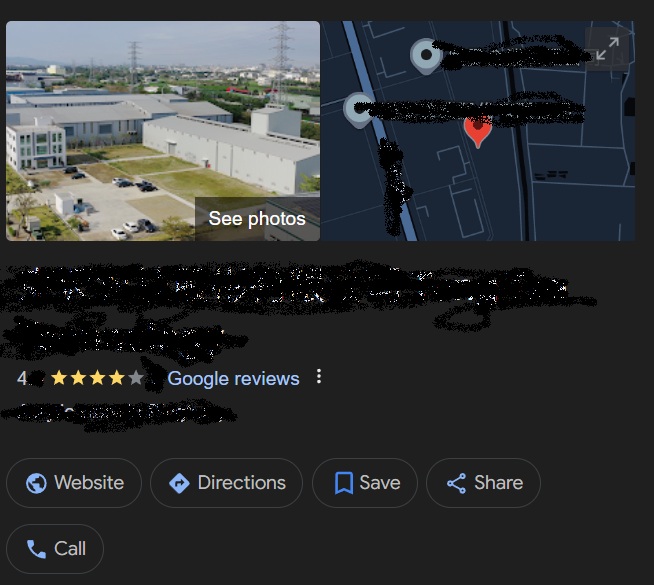
An optimized Google Business Profile for a manufacturing company.
Even manufacturers that serve national or global markets can benefit from local SEO.
Many buyers search for nearby suppliers to reduce shipping costs, improve turnaround time, simplify communication, or meet regional sourcing requirements.
Optimize Your Google Business Profile
Your Google Business Profile helps your company appear in Google Search and Google Maps.
For manufacturers, this can support searches such as:
- Metal stamping supplier near me
- CNC machining company in Taipei
- Plastic injection molding factory near me
- ISO-certified manufacturer in Taiwan
Your profile should include accurate and consistent information, such as:
- Business name
- Address
- Phone number
- Website URL
- Business category
- Services
- Opening hours
- Photos
- Reviews
- Company updates
Build Local Relevance
To improve local visibility, manufacturers should also:
- Add location-based keywords to relevant pages
- Create location pages if serving multiple regions
- Get listed in local business directories
- Join manufacturing associations or chambers of commerce
- Earn local backlinks from credible organizations
- Add LocalBusiness or Organization schema where appropriate
Local SEO helps connect your physical operations with buyers searching in your target markets. It helps your factory, plant, or office stand out when local buyers are ready to act. It’s an essential tactic for any manufacturer looking to grow market share within their geographic footprint.
5. Content Marketing
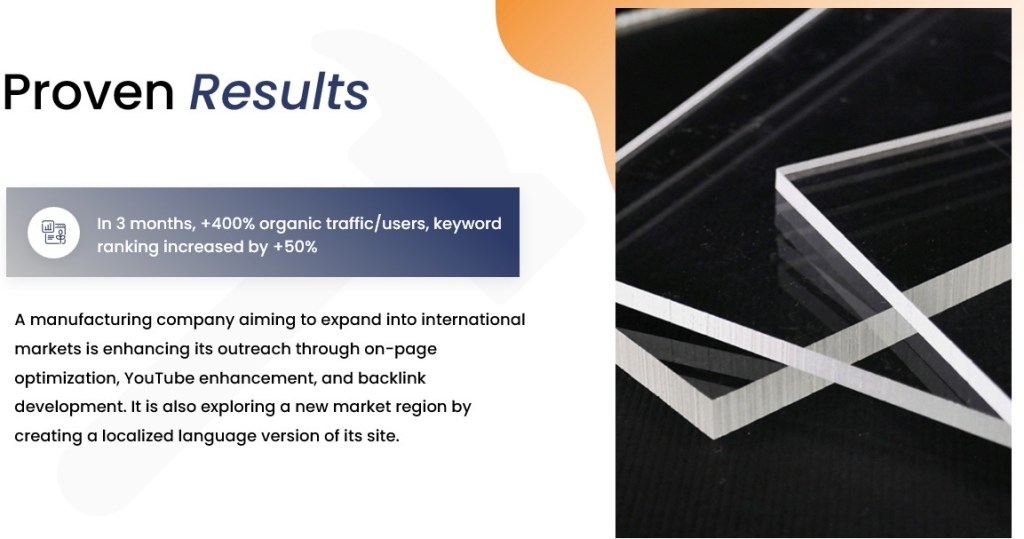
A case study demonstrating successful outcomes for a manufacturing company looking to expand internationally.
Content marketing is especially important in B2B manufacturing because buyers need trust, proof, and technical confidence before making a decision.
Your content should educate prospects, answer technical questions, demonstrate expertise, and show why your company is the right supplier. It should also be structured in a way that search engines and AI platforms can easily understand.
Create Content That Builds Trust
Useful manufacturing content may include:
- Blog articles
- Case studies
- Application guides
- Material comparison guides
- Process explainers
- Industry pages
- Technical FAQs
- White papers
- Videos
- Buyer guides
For example, a CNC manufacturer could create content such as:
- How to Choose the Right CNC Material for Aerospace Components
- CNC Machining vs 3D Printing for Industrial Prototypes
- What ISO 9001 Certification Means for Manufacturing Quality
- How Precision Machining Reduces Production Waste
- Questions to Ask Before Choosing a CNC Machining Supplier
This type of content helps buyers understand your expertise and gives search engines and AI platforms more context about your capabilities.
Structure Content for AI Search
AI-powered platforms often look for clear, extractable information. Your content should make it easy for these platforms to identify what your company does, who you serve, and why your expertise matters.
To support AI Search, include:
- Short, direct answers near the top of key sections
- FAQ blocks
- Clear definitions
- Comparison tables
- Step-by-step explanations
- Specific examples
- Technical specifications
- Schema markup
- Consistent company details
- Internal links to related service pages
For example, instead of only saying, “We offer CNC machining,” a stronger AI Search-friendly section would explain:
“We provide CNC machining services for aerospace, automotive, medical device, and industrial component manufacturers. Our capabilities include aluminum, stainless steel, titanium, and plastic machining, with support for prototyping, short-run production, and high-precision components.”
This gives both buyers and AI platforms more useful context.
Use Case Studies to Prove Capability
Manufacturing buyers want evidence. Case studies are one of the strongest content formats because they show real-world results.
A strong manufacturing case study should include:
- Client challenge
- Industry or application
- Solution provided
- Materials or processes used
- Timeline
- Results
- Photos or visuals
- Testimonial if available
Case studies also support AI Search because they create proof points that connect your brand to specific industries, capabilities, and outcomes.
6. Backlink Strategy
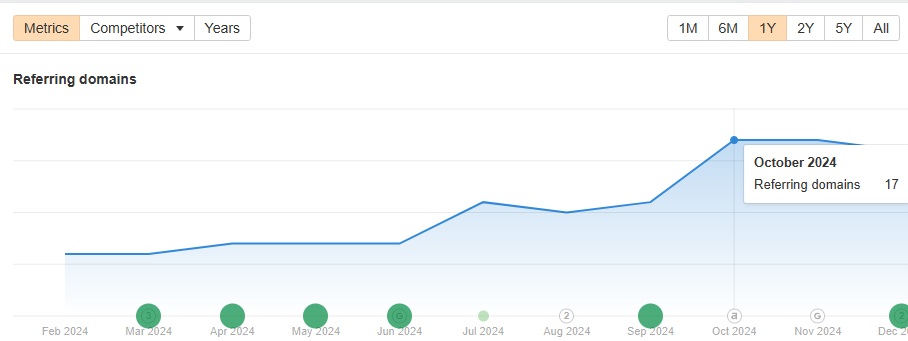
A report illustrating the growth in referring domains for a manufacturing website over the course of 4 months.
Backlinks are links from other websites to your website. They remain an important signal of authority and trust.
For manufacturers, backlinks from relevant industry websites can improve rankings, increase referral traffic, and strengthen your reputation.
Focus on Relevant Industry Links
Manufacturers should prioritize backlinks from credible sources such as:
- Trade publications
- Industry associations
- Supplier directories
- Partner websites
- Local business organizations
- Engineering blogs
- Manufacturing news sites
- Customer or supplier case studies
- Event pages
- Certification bodies
Relevant links are more valuable than random links because they reinforce your company’s authority within your industry.
Use Thought Leadership and PR
You can earn backlinks by sharing useful insights and company updates, such as:
- New facility openings
- New certifications
- Sustainability initiatives
- New equipment or capabilities
- Industry research
- Expert commentary
- Technical guest articles
- Partnership announcements
A strong backlink strategy helps your company become more visible not only in search results, but also across the wider manufacturing ecosystem.
7. Analytics and Reporting

A Google Analytics 4 dashboard showcasing the growth in user activity for a manufacturing website over six months.
Title/Heading: Number of user traffic over a period (GA4)
Date Range on X-Axis: The months are labeled from October to March 2024.
Data Point at March: 256 users recorded up to March 30.
Y-Axis: Indicates user count, ranging from 0 to 300.
Manufacturing SEO should be measured by business impact, not just rankings.
Because B2B manufacturing often involves long sales cycles, analytics helps identify which keywords, pages, and content types are attracting qualified visitors and contributing to leads.
Track the Right Metrics
Important SEO metrics for manufacturers include:
- Organic traffic
- Keyword rankings
- Search impressions
- Click-through rate
- RFQ submissions
- Contact form submissions
- Phone calls
- Quote requests
- Downloads
- Conversion rate
- Top-performing service pages
- Top-performing blog content
- Assisted conversions
- Lead quality
The goal is not just to increase traffic. The goal is to increase relevant traffic that can turn into qualified leads, RFQs, and sales opportunities.
Use Data to Improve Strategy
SEO reporting should help answer questions such as:
- Which pages generate the most qualified leads?
- Which keywords are improving or declining?
- Which service pages need better content?
- Which industries or applications are gaining search demand?
- Which blog posts support buyer research?
- Which pages need stronger CTAs?
- Which technical issues are limiting performance?
By reviewing performance regularly, manufacturers can improve content, prioritize high-impact pages, and make smarter marketing decisions.
Ready to Grow?
According to Gartner, 61% of B2B buyers prefer a rep-free buying experience, meaning they rely heavily on digital research before speaking with sales. For manufacturers, this reinforces why SEO is no longer a nice-to-have. It is becoming a core part of how industrial companies generate visibility, attract qualified leads, and compete in a digital-first market.
But the next stage of search is already here.
Manufacturers now need to be discoverable across Google, AI Overviews, ChatGPT, Perplexity, Gemini, and other AI-powered platforms buyers use to research suppliers and technical solutions.
To grow your manufacturing business online, you need a strategy built around your products, capabilities, buyers, sales cycle, and digital authority. That means combining keyword research, on-page optimization, technical SEO, local visibility, content marketing, backlink building, structured data, AI Search optimization, and data-driven reporting.
At Precision Forge SEO, we help manufacturers turn their websites into stronger lead-generation and authority-building assets. We go beyond generic SEO checklists by building strategies around industrial buyer behavior, technical search demand, AI Search visibility, and measurable business outcomes.
Whether you need to improve search rankings, generate more RFQs, restructure your website, or strengthen your presence across AI-powered search, we can help you build a more effective path to growth.
Frequently Asked Questions
What is manufacturing SEO?
Manufacturing SEO is the process of optimizing a manufacturing company’s website so it can rank higher on search engines for relevant products, services, capabilities, and industry-specific searches. It helps manufacturers attract engineers, procurement teams, OEM buyers, distributors, and business decision-makers who are actively researching suppliers online.
Why is SEO important for manufacturers?
SEO is important for manufacturers because industrial buyers often research suppliers online before contacting a sales team. A strong SEO strategy helps your company appear when buyers search for your services, products, certifications, materials, or technical capabilities. This can increase visibility, improve trust, and generate more qualified RFQs and leads.
How is manufacturing SEO different from regular SEO?
Manufacturing SEO is different because it must account for technical products, niche keywords, long B2B sales cycles, complex specifications, and industry-specific buyer intent. Instead of only targeting broad keywords, manufacturing SEO focuses on high-intent searches related to capabilities, materials, certifications, applications, industries served, and supplier selection.
What keywords should manufacturers target?
Manufacturers should target keywords that match their products, services, capabilities, and buyer intent. Examples include terms related to custom manufacturing, CNC machining, injection molding, metal fabrication, plastic extrusion, ISO certifications, materials, industries served, and “near me” supplier searches. Long-tail keywords often work well because they reflect more specific buyer needs.
How does AI Search affect manufacturing SEO?
AI Search affects manufacturing SEO because buyers are increasingly using AI-powered platforms such as ChatGPT, Perplexity, Gemini, and AI Overviews to research suppliers, compare solutions, and understand technical topics. Manufacturers need clear, structured, and authoritative content so AI platforms can better understand, summarize, and potentially reference their expertise.
How can manufacturers optimize for AI Search?
Manufacturers can optimize for AI Search by creating clear service pages, technical FAQs, comparison content, case studies, direct answers, structured data, and consistent company information across the web. Building authority through backlinks, industry mentions, and trusted third-party sources can also improve the chances of being recognized in AI-powered search results.
What type of content works best for manufacturing SEO?
The best content for manufacturing SEO includes service pages, product pages, industry pages, technical blog articles, case studies, material guides, application guides, comparison articles, FAQs, videos, and downloadable resources. The most effective content answers real buyer questions and connects your technical capabilities to specific business needs.
How long does manufacturing SEO take to show results?
Manufacturing SEO usually takes several months to show meaningful results, especially in competitive or niche industries. Some technical fixes and on-page improvements may create earlier gains, but sustainable SEO growth often depends on consistent content creation, website optimization, backlink building, and performance tracking over time.
Do manufacturers need local SEO?
Yes. Local SEO can help manufacturers appear for location-based supplier searches, even if they serve national or international markets. Buyers may prefer nearby suppliers for faster turnaround, easier communication, reduced shipping costs, or regional sourcing requirements. Optimizing Google Business Profile, local directories, and location-based pages can improve local visibility.
What should manufacturers track to measure SEO success?
Manufacturers should track organic traffic, keyword rankings, impressions, clicks, RFQ submissions, contact form leads, phone calls, quote requests, conversion rates, top-performing pages, backlink growth, and lead quality. For AI Search, manufacturers should also monitor brand mentions, AI citations, referral traffic from AI platforms, and visibility across answer engines.
 Precision Forge SEO
Leave a comment